Nigeria Gambling Regulation 2026: One Market, 37 Rulebooks
How a landmark Supreme Court ruling shattered federal gambling authority across 36 states, and what operators must know to stay compliant in Africa's largest betting market
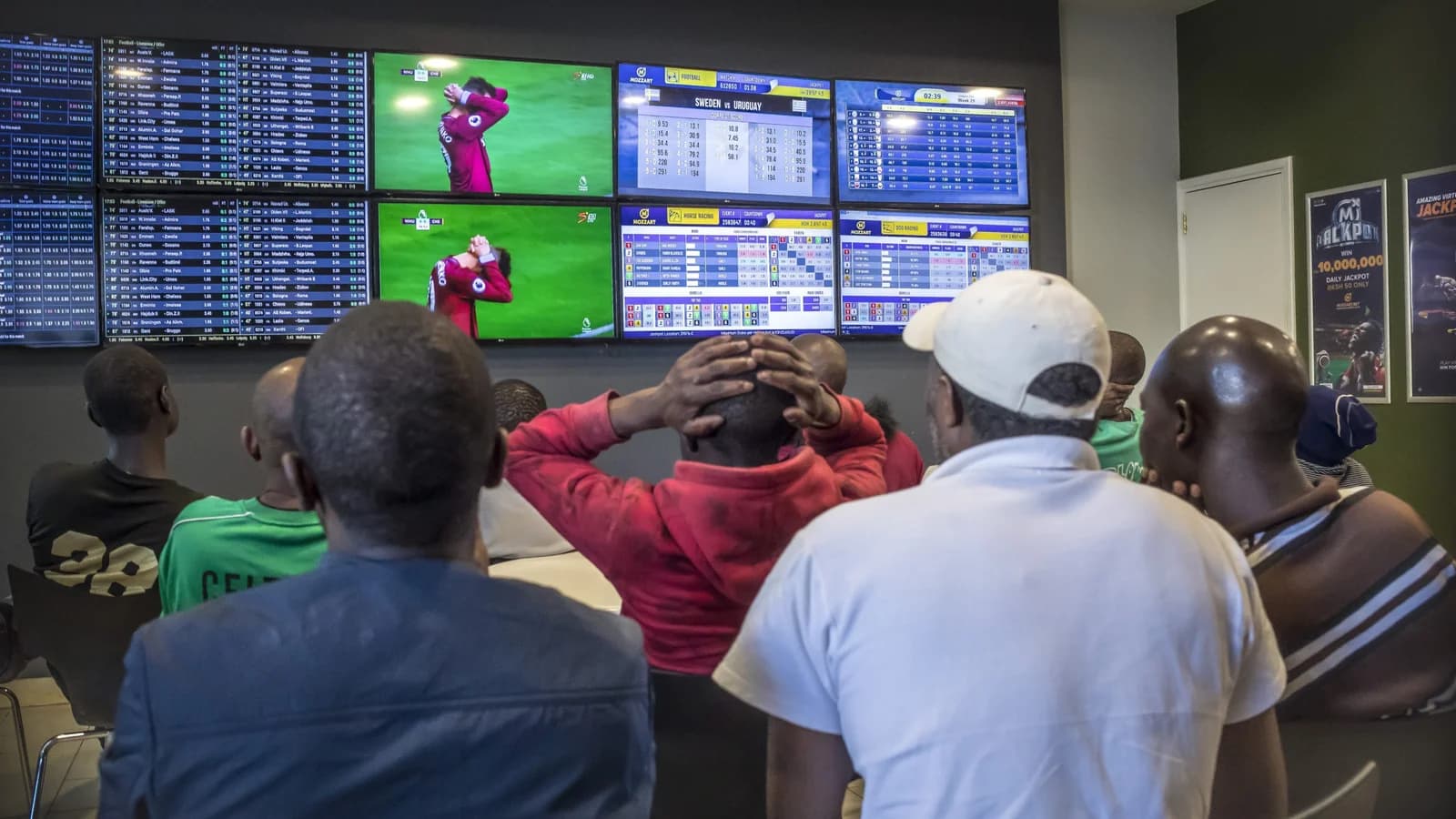
- Nigeria has a population of 242.2 million, with approximately 60 million people participating in sports betting.
- Africa's online gambling market generated $23 billion in gross wins in 2025, but only $5.2 billion flowed through licensed operators.
- Nigeria's rate of unregulated online activity stands at 56%, the lowest in West Africa, compared to a regional average of 69%.
- The November 22, 2024 Supreme Court ruling declared gambling a residual matter under exclusive state legislative authority, effectively nullifying the National Lottery Act 2005.
- More than 22 states formed the Federation of State Gaming Regulators of Nigeria (FSGRN) in May 2025 to coordinate a joint licensing framework.
- The FSGRN's Universal Reciprocity Certificate (URC) allows a single online gaming application to cover all member states.
- Only 6 to 8 states have well-developed gambling regulation in place, according to industry observers.
- Nine majority-Muslim states prohibit gambling outright, creating geographic gaps for any operator seeking national coverage.
- Three operators, SportyBet, Bet9ja, and BetKing, account for 86% of branded betting demand across the country.
What Did Nigeria's 2024 Supreme Court Ruling Actually Change?
On November 22, 2024, Nigeria's Supreme Court delivered a judgment that legal experts immediately described as constitutionally transformative. The case, originally filed by Lagos State some 16 years earlier, centred on whether the National Lottery Regulatory Commission (NLRC) had the constitutional authority to regulate gambling nationwide. The Court ruled it did not. Under Nigeria's constitution, gambling is a residual matter, meaning it falls within the exclusive legislative competence of state governments, not the federal legislature.
The practical consequence was immediate. Every NLRC-issued national operating licence lost its legal foundation outside the Federal Capital Territory. Operators who had relied on a single federal licence for national coverage suddenly faced a compliance gap of potentially 36 states, each empowered to set its own rules, fees, and enforcement priorities. The President later declined to sign the Central Gaming Bill 2025, which had sought to restore some federal authority by using telecommunications infrastructure as a constitutional hook. That rejection confirmed the state-level framework as permanent.
How Does the FSGRN Universal Reciprocity Certificate Work?
The Federation of State Gaming Regulators of Nigeria launched in May 2025 as the industry's practical response to the ruling. More than 22 states joined the federation, which produced a Subnational Reciprocity Licensing Framework and the Universal Reciprocity Certificate, a single application mechanism covering all FSGRN member states for four categories of online gaming: sports betting, online casino operations, public online lottery, and promotional competitions.
The URC waived licensing fees for the entirety of 2025 for operators holding legacy NLRC paperwork, allowing a transitional period before standard renewal fees resumed on January 1, 2026. It represents a significant structural improvement over the scenario of 36 separate applications, but it carries important limitations. The certificate provides legal certainty only within FSGRN member states. States outside the federation retain undefined and potentially inconsistent regulatory positions. Operators cannot assume that FSGRN coverage equates to national coverage.
Which States Actually Have Solid Gambling Regulation in Place?
Despite the formation of the FSGRN, the depth of regulatory capacity varies sharply from state to state. Fisayo Oke, CEO of responsible gambling monitor Gamble Alert, was candid about the gap: "only about six to eight states have something quite solid in terms of regulation." The remaining member states have passed enabling legislation or joined the framework but lack the enforcement infrastructure, staffing, and budgets to implement it meaningfully.
Lagos State represents the most developed jurisdiction in the country. The Lagos State Lotteries and Gaming Authority (LSLGA), established under the Lagos State Lotteries and Gaming Law 2021, covers both physical and digital operations serving Lagos residents across six licence categories: sports betting, casino, lottery operator, gaming machine, pool betting, and promotional permits. Lagos also operates SafePlay, a self-exclusion registry that flags excluded players across all licensed operators within the state.
Other states with pre-existing frameworks before the ruling include Delta, Imo, Akwa Ibom, Anambra, Cross River, Ogun, Ondo, Oyo, and Rivers. Osun passed new lottery and gaming legislation in November 2024, timed to coincide with the Supreme Court ruling. However, a group of nine majority-Muslim states, among them Kano, Sokoto, Kebbi, Zamfara, Gombe, Taraba, Adamawa, Ebonyi, and Osun, prohibit gambling entirely, cutting operators off from significant geographic coverage regardless of their licensing status in other states.
How Big Is Nigeria's Gambling Market and Why Does It Matter?
The numbers that draw international attention to Nigeria are striking. With 60 million active bettors out of a population of 242.2 million, Nigeria has one of the highest absolute participation rates for sports betting on the continent. The $1.6 billion in gross gaming wins recorded in 2025 by H2 Gambling Capital underlines the commercial scale, but the more revealing figure is the gap between total African online gambling revenues of $23 billion and the $5.2 billion that flowed through licensed operators. That $17.8 billion difference represents unregistered activity across the region, some portion of which flows through Nigeria's own grey market.
Even within its fragmented regulatory environment, Nigeria records a relatively low unregulated online activity rate of 56%, compared to a regional West African average of 69%. The interpretation depends on perspective: for regulators, it signals that existing frameworks have had some impact; for operators and investors, it signals that a substantial share of Nigerian bettors remain available to the formal sector if regulatory clarity can be delivered at scale.
Which Operators Dominate the Nigerian Betting Market?
Local brands have an overwhelming structural advantage over international entrants. According to Blask market intelligence data, SportyBet, Bet9ja, and BetKing together account for 86% of branded betting demand across Nigeria. Their dominance reflects both early-mover advantage and their understanding of local payment infrastructure, mobile-first product delivery, and the dominance of English Premier League and UEFA Champions League football as primary betting markets. International operators attempting to enter Nigeria face not only the regulatory complexity but also the challenge of displacing incumbents with deeply embedded brand recognition and distribution networks.
What Are the Biggest Compliance Challenges for International Operators?
Adewumi Salami, a gaming law specialist at DLA Piper Africa, described the period from November 2024 to May 2025 as particularly difficult. Operators were navigating a landscape where their existing NLRC paperwork was legally insufficient but no replacement framework was fully operational. "The Supreme Court's decision was constitutionally seismic," Salami observed, noting that operators had to make commercial judgments about risk exposure with limited regulatory guidance.
The structural challenges that remain after the FSGRN's formation include several compounding factors. Non-FSGRN states present undefined enforcement risks. The URC covers online gaming only, leaving brick-and-mortar operations subject to individual state licensing processes. Regulatory capacity is thin outside Lagos: state regulators operate with limited staffing and minimal travel budgets, making meaningful monitoring of licensed operators across wide geographic areas difficult. Due diligence for acquisitions and investment decisions requires jurisdiction-by-jurisdiction audits because legacy NLRC licences are no longer legally adequate.
The geographic prohibition issue is also a compliance risk for digital operators. Unlike a physical betting shop that can simply not open in a prohibited state, an online platform accessible via mobile must implement geographic restrictions to avoid serving bettors in states where gambling is illegal. This requires real-time location verification and creates friction in the user experience for Nigerian customers who cross state lines.
What Taxes Do Operators Face Under the New Framework?
The FSGRN has proposed a uniform Gross Gaming Revenue (GGR) tax of 11% across member states, intended to create consistency and prevent operators from structuring their Nigerian operations through whichever state offers the lowest rate. A proposed player winnings withholding tax has attracted more controversy.
Adewale Akande, Head of Legal and Compliance at Bet9ja, raised formal objections to the withholding tax, citing concerns about the privacy implications of requiring operators to report individual player winnings to state tax authorities. FSGRN President Bashir Are acknowledged the industry feedback and indicated that thresholds of between 5 million and 10 million Nigerian naira might be more appropriate for triggering the withholding obligation, a concession that would narrow the scope of the requirement significantly. The final position has not been codified across all member states.
Global comparisons are instructive. Colombia filed a permanent 19% online gambling VAT in 2026, while South Korea's proposed casino levy increase has drawn warnings from operators about profit compression of up to 37%. Nigeria's proposed 11% GGR rate sits in a broadly competitive range for emerging markets, but its effectiveness depends on uniform implementation across all member states and the absence of duplicative local charges.
How Does Player Protection Work Across State Lines?
Player protection is one of the clearest examples of the fragmentation problem in practice. Lagos State's SafePlay system flags self-excluded players across all operators licensed in Lagos, providing a meaningful level of protection within that jurisdiction. But the exclusion does not follow a player who crosses into another state. A bettor who self-excludes in Lagos can open an account with a licensed operator in Oyo or Rivers State without triggering any automatic restriction.
This creates what regulators call regulatory arbitrage at the consumer level: vulnerable players can, intentionally or otherwise, circumvent self-exclusion by registering with operators licensed in different states. For a nationally active online platform, implementing a consistent self-exclusion policy across all Nigerian states currently requires building the technical capability to cross-check against multiple separate registries, where those registries exist at all.
How Does Nigeria Compare to Other African Gambling Markets?
Nigeria is not the only African market wrestling with regulatory fragmentation, but its scale makes the challenge more acute. John Mutua of the Association of Gaming Operators Kenya noted that Kenya itself is split across five separate regulatory bodies, with "no single owner accountable for the whole." Kenya's fragmentation affects a much smaller market by population, but the structural similarity is notable: in both countries, the absence of a single authoritative regulator creates compliance costs and creates opportunities for regulatory arbitrage.
Robin Bennett of the Western Cape Gambling and Racing Board in South Africa offered a principle that resonates across the continent: effective regulation requires "clarity, certainty and consistency, matched by practical enforcement." South Africa's provincial model has operated for longer and benefits from more established institutional capacity than Nigeria's newly state-level system. The Western Cape and Gauteng jurisdictions in particular have developed regulators with genuine enforcement capability, a threshold that most Nigerian states are still some distance from reaching.
Is Nigeria Still Worth Entering Despite the Regulatory Complexity?
Despite the compliance burden, investment interest in Nigeria has not collapsed. The country's young population, its deep cultural connection to football betting, and the long-term commercial opportunity represented by 60 million active bettors are factors that outweigh the regulatory uncertainty for many operators. The FSGRN framework, imperfect as it is in its current form, has established a workable starting point for multi-state operations that would have been far more difficult to construct state by state.
The practical guidance for operators considering Nigeria in 2026 comes down to five priorities: anchor compliance in Lagos first, as the most developed jurisdiction; apply for the URC to cover FSGRN member states for online operations; conduct a jurisdiction-by-jurisdiction audit of non-FSGRN states before launching; implement geographic restrictions for majority-Muslim states; and build compliance documentation on the assumption that NLRC legacy licences will not satisfy state regulators or due diligence processes in future transactions.
"Only about six to eight states have something quite solid in terms of regulation."
Fisayo Oke, CEO, Gamble Alert
Frequently Asked Questions: Nigeria Gambling Regulation 2026
What happened to the NLRC after the Supreme Court ruling?
The National Lottery Regulatory Commission's authority to regulate gambling nationwide was effectively nullified by the November 2024 Supreme Court ruling. Its jurisdiction now applies only within the Federal Capital Territory. NLRC-issued licences are no longer legally sufficient for operations in Nigeria's 36 states.
What is the FSGRN Universal Reciprocity Certificate?
The Universal Reciprocity Certificate is a single-application online gaming licence that covers all member states of the Federation of State Gaming Regulators of Nigeria. It applies to sports betting, online casino, public online lottery, and promotional competitions. It does not cover retail or land-based operations, which still require individual state licences.
How many states have established gambling regulation in Nigeria?
More than 22 states have joined the FSGRN, but only 6 to 8 are considered to have substantive regulatory frameworks backed by practical enforcement capacity. Several states have passed enabling legislation without developing the institutional infrastructure to implement it.
Which Nigerian states prohibit gambling?
Nine majority-Muslim states currently prohibit gambling: Adamawa, Ebonyi, Gombe, Kano, Kebbi, Osun, Sokoto, Taraba, and Zamfara. Online operators must implement geographic restrictions to exclude users in these states.
What GGR tax rate are operators expected to pay?
The FSGRN has proposed a uniform 11% GGR tax across member states. A player winnings withholding tax has also been proposed, though the threshold level is still under discussion, with FSGRN President Bashir Are suggesting figures of 5 million to 10 million naira.
Can international operators realistically enter Nigeria?
Yes, but the compliance requirements are substantially more complex than under the former federal framework. Starting with Lagos State licensing and a FSGRN URC application, and retaining legal counsel with state-specific Nigerian gaming expertise, is the recommended approach before attempting national-scale operations.
Updated July 2026
]]>More from iGaming Daily
Cambodia Shuts 72 of 195 Licensed Casinos in Year-Long Online Fraud Crackdown
Poland's 12% Turnover Tax Is Driving Players to Illegal Online Casinos

PAGCOR Privatization Could Cost Philippines Healthcare P2.1 Billion a Year