South Korean Casino Stocks Eyed for H2 Rebound on 25% Chinese Tourist Surge
Paradise Co, Grand Korea Leisure and Lotte Tour Development all hit 52-week lows in early July despite 10 million foreign arrivals in H1 2026, but analysts say earnings improvement is imminent as China's inbound tourism to Korea grows 25% and Japan's over-tourism policies redirect Chinese visitors.
South Korean casino stocks are forecast for a significant earnings recovery in the second half of 2026, driven by a 25% year-on-year surge in Chinese tourist arrivals and the redirection of Chinese outbound travelers away from Japan, according to analysts at Shinhan Investment and Securities and Samsung Securities. The bullish outlook follows a paradoxical first half in which major operators Paradise Co, Grand Korea Leisure (GKL) and Lotte Tour Development hit 52-week share price lows despite South Korea recording 10 million inbound foreign visitor arrivals in H1 at the fastest pace in the country's history.
Why Casino Stocks Fell Despite a Tourism Boom
South Korea's casino sector is exclusively open to foreign passport holders under domestic law, with Kangwon Land the only casino permitted to admit local residents. This means casino revenues are directly tied to inbound tourist volume and spending, particularly from Chinese VIP and mass-market visitors. The first-half disconnect between record arrivals and disappointing share prices reflects several factors: casino stocks were sidelined as Korea's KOSPI index rallied around AI and semiconductor names, some operators posted earnings below market expectations, and higher operating costs and lower gaming hold rates weighed on profitability.
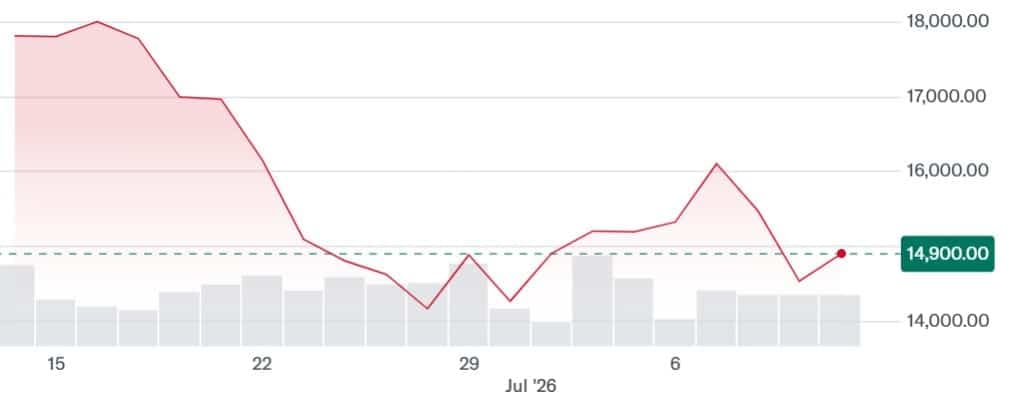
Paradise Co, which operates casinos and resorts in Incheon and Busan, hit a 52-week intraday low of KRW 12,220 on July 3, 2026. GKL, operator of the Seven Luck casino chain in Seoul and Busan, touched a 52-week low of KRW 10,150. Lotte Tour Development, operator of the Jeju Dream Tower integrated resort, fell to a 12-month low of KRW 14,070 on June 29. Paradise posted a 56% year-on-year decline in operating profit in Q1 2026 despite revenues growing 3.8%, partly attributable to the acquisition costs of the Grand Hyatt Incheon West Tower at Paradise City.
What Analysts Are Forecasting for H2 2026
Shinhan Investment and Securities projects Paradise will report quarterly revenue of approximately $213 million in Q2 2026, an 8% increase from Q1, with operating profits rising 18% to over $29 million. Ji In-hae, a research analyst at Shinhan, said Paradise is in "pole position to benefit most" from rising Chinese visitor numbers given its casino locations in Incheon and Busan, which are key entry points for Chinese tourists. Ji said Busan is "highly likely to become the biggest beneficiary" of Korea's visa waiver incentives that have seen tourism numbers rise in recent months.
Samsung Securities analyst Lee Hye-in forecast that South Korean casino stock prices "will rebound in H2 as tourist numbers climb even higher during the upcoming East Asian holiday periods," including the peak summer season and the Chuseok (harvest festival) holiday in September. Samsung Securities also projected that Lotte Tour Development would post second-quarter revenue of KRW 147.1 billion, a new quarterly record. GKL was expected to see its second-quarter drop surpass KRW 1 trillion, with further growth in Q3 on peak-season effects.
"We forecast that the relative performance advantage of domestic companies compared to Macao operators will continue in the second half of the year." - Lee Hye-in, Analyst, Samsung Securities
The China Tourism Shift Driving the Thesis
Chinese tourist arrivals to South Korea from January to May 2026 reached 2.56 million, a 25% increase year-on-year, according to Korea Tourism Organisation data. Analysts attribute the growth to the weakness of the Korean won improving price competitiveness and deteriorating China-Japan relations redirecting Chinese outbound tourism toward Korea. Japan's simultaneous tightening of tourism policy in 2026, including a tourism tax increase from JPY 1,000 to JPY 3,000 and stricter single-entry visa requirements for foreign visitors, is expected to provide additional tailwind for Korean casinos in H2 2026 as Chinese group tourists choose Korea over Japan.
Monthly spending by foreign tourists in South Korea surpassed KRW 2 trillion for the first time in 2026, per government data, confirming that the visitor surge is translating into real consumption. Total official projections for 2026 place full-year inbound arrivals at over 20 million, a historic high, with South Korea's Ministry of Culture Sports and Tourism having already confirmed March 2026 was the strongest ever month for inbound tourism.
| Operator | 52-Week Low (H1 2026) | Q2 2026 Revenue Forecast (Shinhan / Samsung) | Key Casino Locations |
|---|---|---|---|
| Paradise Co | KRW 12,220 (July 3) | ~$213M / KRW 309B (Shinhan) | Incheon, Busan |
| Grand Korea Leisure | KRW 10,150 (July 1) | Drop above KRW 1 trillion (Samsung) | Seoul (x3), Busan |
| Lotte Tour Development | KRW 14,070 (June 29) | KRW 147.1B quarterly record (Samsung) | Jeju Dream Tower |
Frequently Asked Questions
Can Korean residents gamble at South Korean casinos?
No. South Korea's major casino operators are foreigner-only venues. Kangwon Land is the only casino in South Korea permitted to admit Korean nationals.
Why did South Korean casino stocks fall despite record tourist arrivals?
Casino stocks underperformed the KOSPI's AI and semiconductor-driven rally in H1 2026. Some operators' earnings fell below expectations due to higher operating costs, lower gaming hold rates and lower VIP volumes, despite strong overall visitor numbers.
What is driving Chinese tourist growth to South Korea in 2026?
A 25% year-on-year increase in Chinese arrivals to South Korea has been driven by the weakness of the Korean won improving affordability, Korea's visa waiver incentives for Chinese group tourists, and the redirection of Chinese outbound travel away from Japan amid deteriorating China-Japan diplomatic relations and Japan's tightening tourism policies.
More from iGaming Daily

SEGG Media Announces Intent to Acquire UK Casino with Online and Land-Based Licenses
Lottomatica H1 2026: Online Revenue Rises 13% as EBITDA Margin Hits 57.9% and Full-Year Guidance Backed
Caesars Q2 2026: Las Vegas Revenue Falls 3.5% as Fertitta Deal Moves Toward Spring 2027 Close